Plano, Texas sits squarely in the path of some of North Texas's most powerful wind events. From spring supercell thunderstorms to late-season cold fronts that push sustained gusts well above 60 mph, Collin County homeowners face wind-related roof damage every year — often without realizing the full extent of what the storm left behind. If your home in Plano experienced a recent wind event, this guide will walk you through how to identify wind damage, what your insurance policy likely covers, and how to choose a certified roofing contractor who will protect your interests from inspection through final payment.
How Wind Damages Roofs in Plano, TX
Wind damage to roofing systems is rarely as obvious as a tree falling through your attic. In most cases, the damage is subtle but structurally significant. Understanding the mechanics of wind damage helps you recognize what to look for — and what to document before your insurance adjuster arrives.
Shingle Lifting and Seal Failure
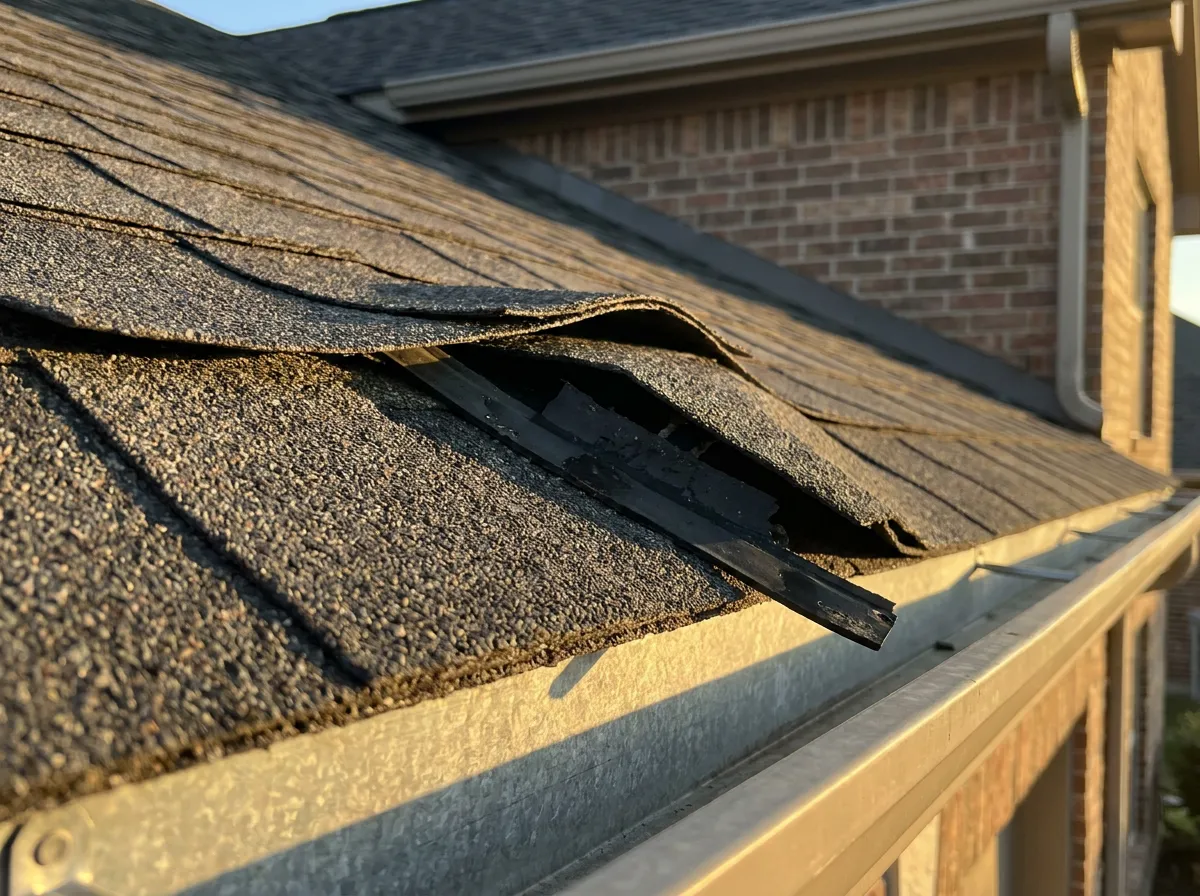
Modern asphalt shingles are bonded to each other with a factory-applied adhesive strip. When sustained winds exceed 50–60 mph — a common threshold during DFW thunderstorm events — that adhesive bond can break. Once the seal fails, shingles lift, allowing wind-driven rain to penetrate beneath the surface. Even if the shingle falls back into place after the storm, the broken seal leaves your roof permanently vulnerable to future water intrusion. This type of damage is invisible from the ground but clearly identifiable during a professional inspection.
Missing Shingles and Granule Loss
Higher wind speeds can tear shingles off entirely, leaving bare decking exposed to the elements. Even partial shingle loss — a missing tab or a cracked corner — creates an entry point for water. Additionally, wind-driven debris scours granules from shingle surfaces. Granule loss accelerates UV degradation and shortens the effective life of your roofing system by years.
Flashing Damage and Lifted Edges
Metal flashing around chimneys, skylights, and roof penetrations is particularly susceptible to wind uplift. When flashing separates from the roof surface, water channels directly into the structure. Similarly, drip edge and rake edge flashing along the perimeter of the roof can be peeled back by high winds, compromising the entire edge seal.
Structural Deck Damage
In severe wind events, the roof decking itself can be compromised. Delaminated or cracked OSB decking must be replaced before new shingles are installed — a scope item that insurance adjusters sometimes miss on initial inspections.
Documenting Wind Damage for Your Insurance Claim in Plano
Proper documentation is the foundation of a successful wind damage insurance claim. Collin County homeowners who document thoroughly before and during the claims process consistently receive more complete settlements than those who rely solely on the insurance company's adjuster report.
Step 1: Record the Storm Event
Note the date and time of the wind event. Pull local weather data from the National Weather Service or a weather history service to document wind speeds at your specific address. Insurance carriers require evidence that a qualifying weather event occurred — and having official wind speed data tied to your property's location strengthens your claim significantly.
Step 2: Photograph All Visible Damage
Before any repairs are made, photograph every area of visible damage from the ground. Include wide shots showing the overall roof condition and close-ups of specific damage points. Document any interior water intrusion — ceiling stains, wet insulation, or damaged drywall — as these are direct evidence of roof failure.
Step 3: Request a Professional Inspection Before Filing
One of the most important steps Plano homeowners can take is to have a certified roofing contractor complete a thorough inspection before the insurance adjuster arrives. A professional inspection report documents the full physical scope of damage in construction terminology — the same language used in insurance estimates. This report becomes your baseline for ensuring the adjuster's scope matches the actual damage.
At Roofing Professionals of Texas, our storm damage inspection process includes a 21-point forensic assessment of every roof component — shingles, decking, flashing, gutters, fascia, and ventilation systems — with photographic documentation of every damage point.
Navigating Your Wind Damage Insurance Claim in Collin County
Texas homeowners' insurance policies generally cover wind damage as a named peril. However, the claims process involves several steps where coverage can be reduced, delayed, or denied — often not because the damage isn't covered, but because the scope of damage wasn't fully documented or the claim wasn't presented in the right format.
Understanding Your Policy's Wind Damage Provisions
Most Texas homeowners' policies cover wind damage under the dwelling coverage section. Key terms to understand include:
- Replacement Cost Value (RCV): Pays to replace damaged materials with new materials of like kind and quality — the preferred coverage for full restoration.
- Actual Cash Value (ACV): Pays replacement cost minus depreciation — often significantly less than what full replacement actually costs.
- Wind/Hail Deductible: Many Texas policies carry a separate, higher deductible for wind and hail claims — often 1–2% of the insured dwelling value.
What to Do If Your Claim Is Underpaid
If your insurance carrier's estimate doesn't cover the full scope of documented damage, you have options. A roofing contractor experienced in insurance restoration can submit a supplemental claim — a line-item breakdown of damage items the adjuster missed or undervalued. Supplementation is a standard part of the claims process, not a dispute. It simply ensures the final scope of work matches the physical evidence of damage.
Our team at Roofing Professionals of Texas has extensive experience identifying policy-covered damage and providing objective line-item assessments that support complete, fair claim settlements for Plano homeowners. Learn more about our roof repair and restoration services.
Choosing the Right Wind Damage Roofing Contractor in Plano, TX
After a major wind event in Collin County, out-of-state storm chasers flood the area offering quick repairs and low prices. Protecting yourself from contractor fraud is as important as protecting your roof.
What to Look for in a Plano Roofing Contractor
- Texas contractor registration: Verify the contractor is registered with the Texas Department of Licensing and Regulation (TDLR).
- Local presence: Choose a contractor with a verifiable local address and established history in the DFW market — not a temporary storm-chasing operation.
- Insurance and bonding: Confirm the contractor carries general liability insurance and workers' compensation coverage. Request certificates of insurance before signing any contract.
- Manufacturer certifications: Certified installers can offer extended manufacturer warranties — often 25–50 years — that non-certified contractors cannot.
- Written scope of work: Never accept a verbal estimate. A professional contractor provides a detailed written scope that matches the insurance estimate line by line.
Red Flags to Avoid
- Contractors who ask you to sign an Assignment of Benefits (AOB) — this transfers your insurance rights to the contractor.
- Pressure to sign immediately "before the offer expires."
- Requests for large upfront cash payments before work begins.
- No physical local address or verifiable business history.
The Wind Damage Roof Repair Process: What to Expect
Once your insurance claim is approved and a contractor is selected, the repair or replacement process follows a structured sequence. Understanding each phase helps you stay informed and ensures the work is completed to code.
Phase 1: Pre-Construction Documentation
Before any materials are ordered, your contractor should provide a final scope of work that matches your approved insurance estimate. Any supplements for additional damage discovered during tear-off should be submitted to your carrier before work begins — not after.
Phase 2: Material Selection and Permitting
Plano requires a building permit for full roof replacements. Your contractor should pull the permit — never a homeowner. Material selection should match or exceed the specifications in your insurance estimate. Upgrading to impact-resistant shingles (Class 4) may qualify you for a premium discount with your carrier.
Phase 3: Tear-Off and Deck Inspection
During tear-off, the decking is inspected for damage. Any compromised OSB or plywood must be replaced and documented before new underlayment and shingles are installed. This is a critical quality checkpoint — and a common area where shortcuts are taken by less reputable contractors.
Phase 4: Installation to Code
North Texas municipalities require specific installation standards: ice and water shield in valleys and at eaves, proper drip edge installation, and wind-rated fastening patterns. Roofing Professionals of Texas installs every roof to meet or exceed local code requirements and manufacturer specifications — ensuring your warranty is valid and your home is protected.
Phase 5: Final Inspection and Documentation
After installation, a final inspection confirms the work matches the approved scope. Your contractor should provide a completion certificate, manufacturer warranty documentation, and a copy of the permit inspection sign-off. These documents are essential for future insurance claims and property resale.
Frequently Asked Questions: Wind Damage Roof Repair in Plano, TX
How long do I have to file a wind damage claim in Texas?
Texas Insurance Code requires homeowners to file a claim within one year of the date of loss for most residential policies. However, some policies have shorter notice requirements. File as soon as possible after a wind event — delays can complicate the claims process.
Will my insurance rates go up if I file a wind damage claim?
Texas law prohibits insurers from surcharging or non-renewing a policy solely because of a weather-related claim. However, multiple claims in a short period can affect your renewal terms. Consult your agent for specifics on your policy.
Can I repair just the damaged section instead of replacing the whole roof?
Partial repairs are possible when damage is limited to a specific area and the remaining roof is in good condition. However, if the existing shingles are discontinued or the color match is poor, a full replacement may be necessary to maintain a uniform appearance — and your insurance policy may cover the full replacement cost in that scenario.
How do I know if my roof has wind damage if I can't see it from the ground?
Many forms of wind damage — seal failures, lifted flashing, granule loss — are not visible from the ground. A professional inspection by a certified roofing contractor is the only reliable way to assess the full extent of wind damage. Roofing Professionals of Texas offers free 21-point inspections for Plano homeowners.
Schedule Your Free Wind Damage Inspection in Plano, TX
Don't let hidden wind damage become a costly problem. Our certified team serves Plano and all of Collin County with forensic roof inspections, complete insurance claim support, and code-compliant installations.
📞 Call 469-906-2600 | Schedule Online at roofingprotx.com/contact
For more information on our full range of roofing services, visit our roof replacement and storm damage restoration service pages.